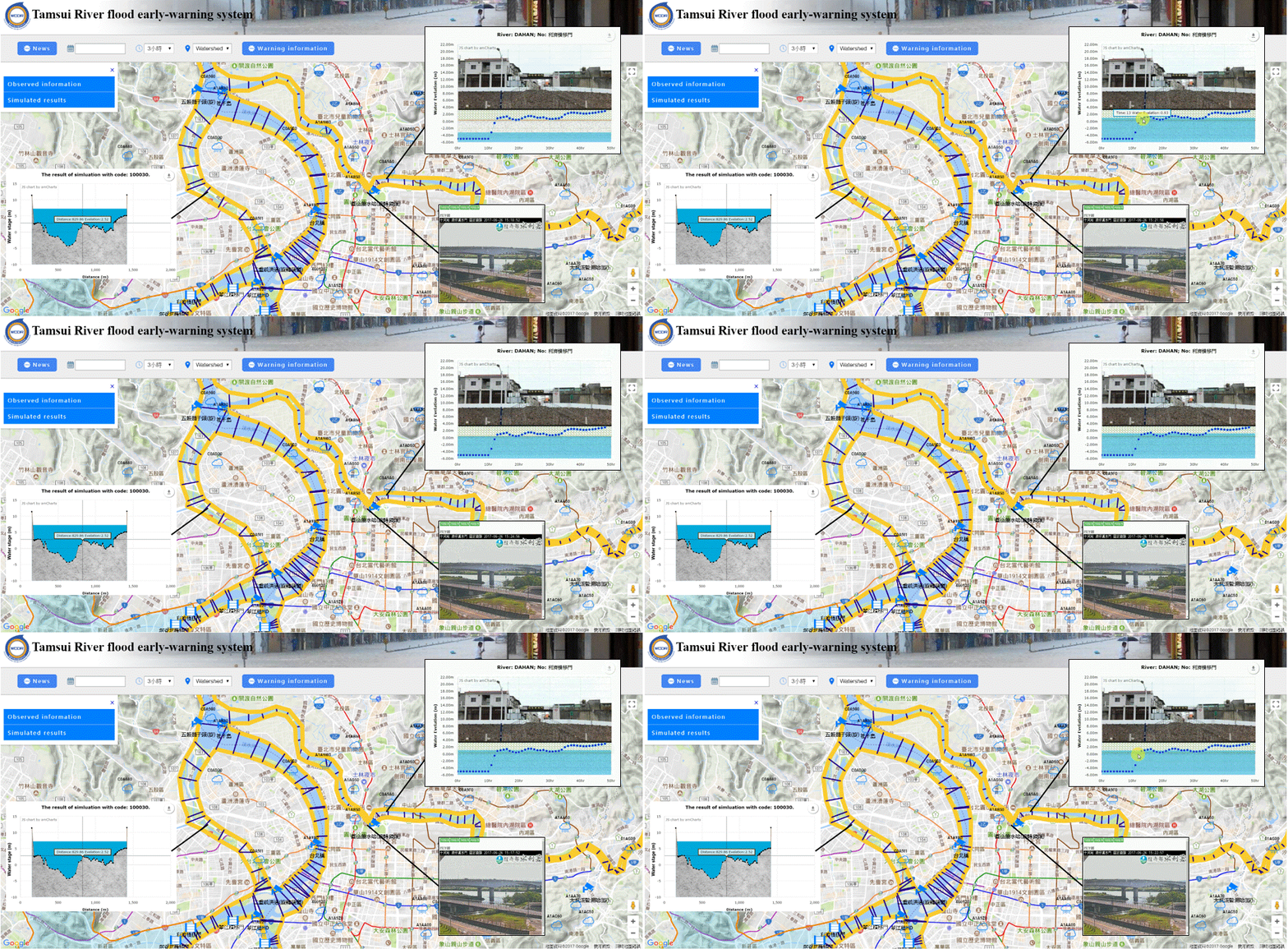
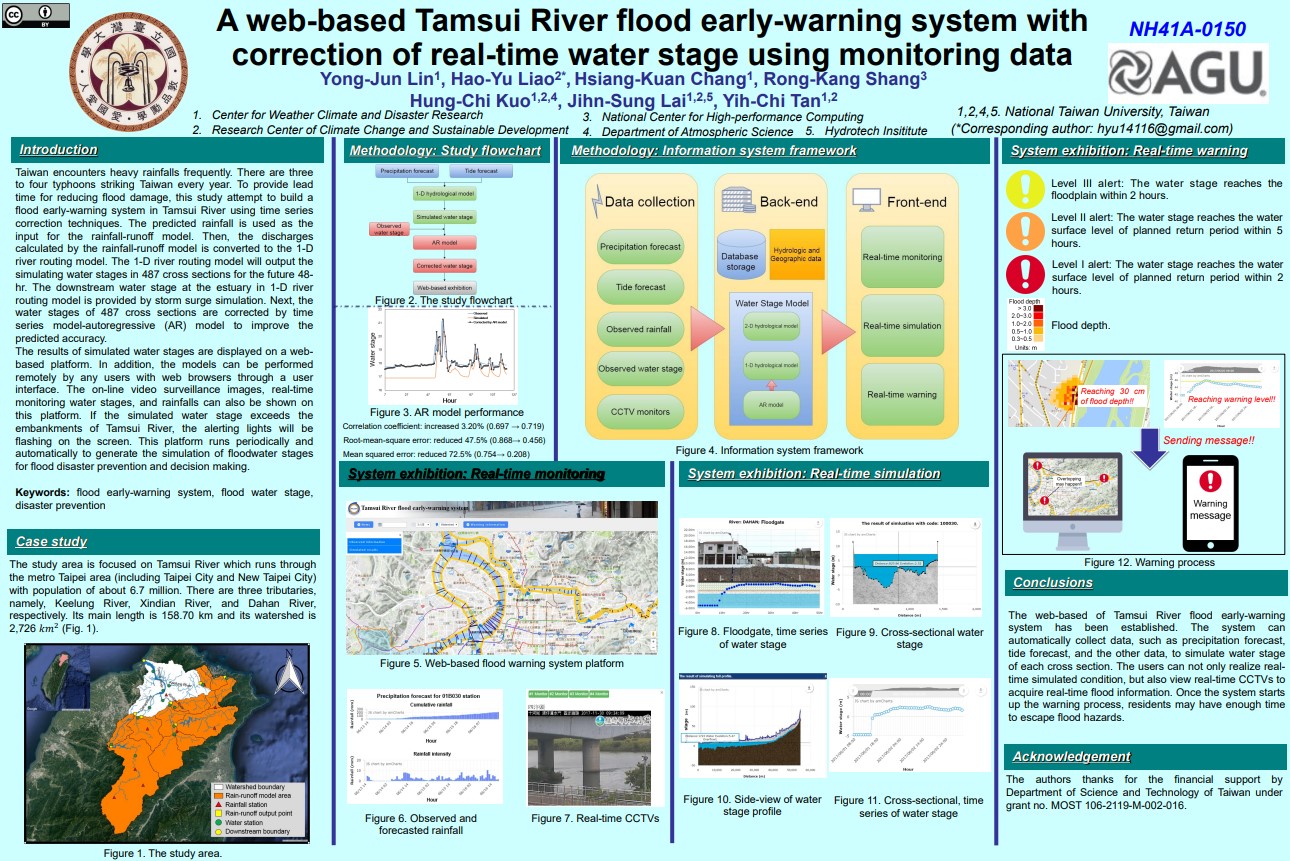
TOPIC 01 / HYDROINFORMATICS
Urban Flood Early Warning Using Data-Driven Models
This research develops data-driven and optimization-based flood early warning frameworks that improve the timeliness, reliability, and interpretability of urban flood risk assessment by integrating machine learning, probabilistic modeling, and hydrodynamic simulation.
Methods & contributions
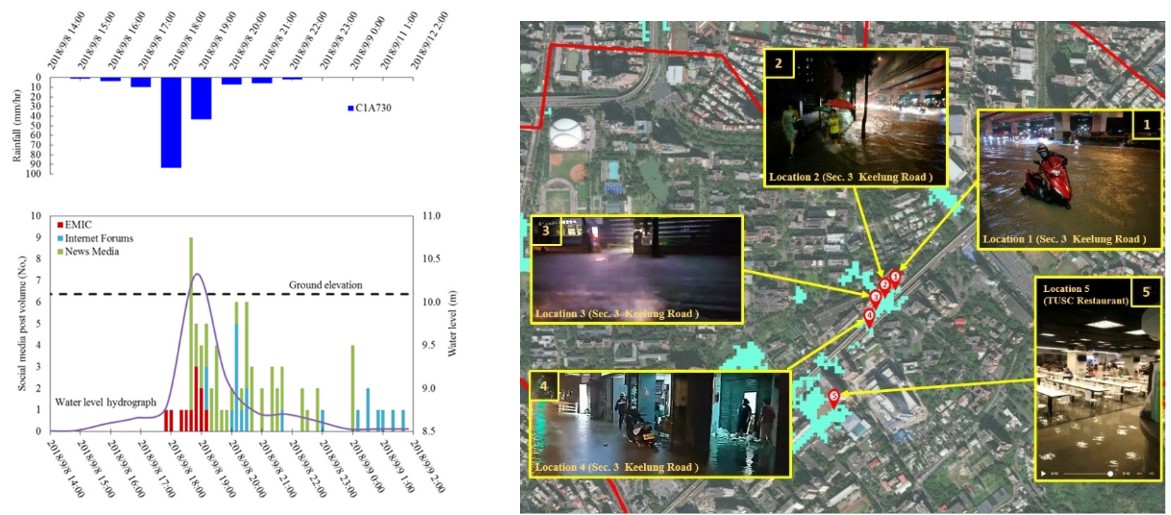
- Probabilistic rainfall–inundation modeling: Developed a data-driven framework using modified Support Vector Machines (SVMs) to estimate probabilities of flash flooding, replacing binary rainfall-threshold warnings with probabilistic risk outputs.
- Rainfall pattern analysis for hazardous event identification: Introduced hydrological rainfall pattern analysis to identify critical short-duration, high-intensity rainfall events, improving training data quality and early-warning reliability.
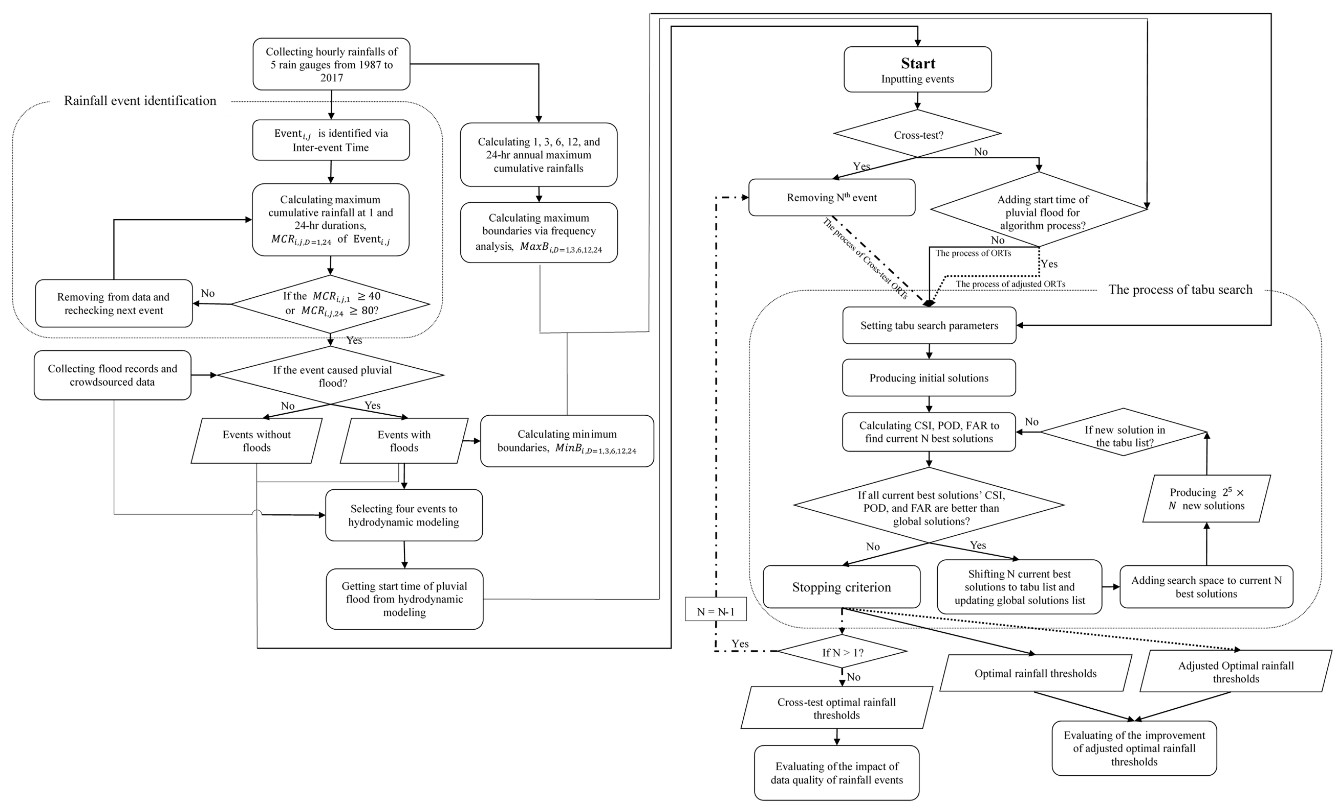
- Optimization of rainfall thresholds for pluvial flood warnings: Applied tabu search optimization to efficiently calibrate rainfall thresholds for urban flood warnings and warning issuance 1–3 hours in advance.
These methods demonstrate how machine learning, optimization algorithms, and hybrid data sources can support efficient, scalable, and interpretable flood early warning systems for urban environments.